Showing posts with label scarlett. Show all posts

Friday, November 25, 2022

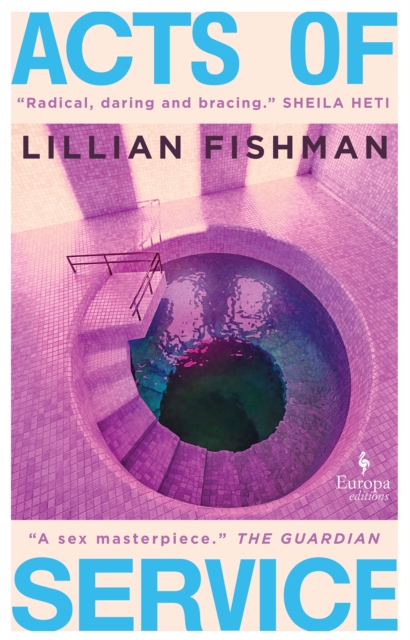
Acts of Service, by Lilian Fishman

 Acts of Service is a novel set in Brooklyn, New York, centring around Eve, a New Yorker in her twenties who is finding her own sense of sexual freedom and queer identity. This was a fascinating book, exploring a variety of somewhat philosophical themes, from sexual identity and exploration to the ideas surrounding personal freedom. Amid a landscape of polyamory, Fishman unpicks the intricacies of sexuality and the interplay of power and dominance – does one need to be dominant to feel powerful? 

Being on the autistic spectrum myself, I find human sexual behaviour both foreign and intriguing. Hence the decision to pick up this book – a unique genre/ topic to me. I did enjoy the book, as my interest was sustained by the slightly unusual narrative style where the story unfolds within a very small geographical space, namely a few bedrooms and coffee shops. Yet Fishman purposefully uses this set-up to create room for the human physical intimacies to inspire the very story itself. Thus, reinforcing the power of body language as a powerful method of communication.

A further question Fishman explores is the definition of love. Juxtaposing romantic love and its accompanying emotions, many of which we may see in the public sphere, with intimate love, a more private affair, where hidden desires and sexual fires are unearthed, along with emotions of passion, desire, and lust. Fishman prompts the reader to consider if both romance and intimacy can be considered under this umbrella of love. 

By featuring such weighty topics, Fishman creates a subtly philosophical landscape, using the central characters of Eve, Nathan and Olivia as a vehicle from which to consider wider ideas such as dual identity and the varying personas people portray within public and personal spaces. As someone who finds vulnerability and human behaviour challenging, it was even more interesting to read about how the trio of main characters each deciphered their partners’ attitudes and level of confidence through the feeling of their body. 

My one criticism is that the ending felt a little rushed and disconnected to the main story line. I felt Fishman was trying to increase the tempo near the end by including a slight plot twist and subversion of expectations, yet I don’t feel she fully integrated this into the prior storyline, resulting in a slightly disjointed ending. Regardless, this was certainly not a regrettable read, since it is important to bring to light the topic of vulnerability, as I believe it is a gift to find someone with whom you can feel free with and take down all personal defences. This may be easier said than done, but not out of the realm of possibility…

- Scarlett


Paperback, £13.99.


Friday, July 29, 2022

The Half Life of Valery K, by Natasha Pulley

Written by the bestselling author of ‘The Watchmaker of Filigree Street’, Natasha Pulley’s ‘The Half Life of Valery K’ is a fascinating book inspired by a real Russian closed city, Ozersk. Located in Chelyabinsk Oblast, it was the birthplace of the Soviet nuclear weapons program, created in 1948 during the Cold War. Codenamed ‘City 40’ until 1994, it is now said to be one of the most contaminated places on the planet, referred to by some as the “graveyard of the Earth”. That is not to say that no-one lives there; in fact, the last recorded 2010 consensus estimates that the population is 82,164 people. Despite the Russian government giving the city’s inhabitants many privileges, it comes at an inevitable cost. Researchers suggest that half a million people in Ozersk and its surrounding area have been exposed to five times as much radiation as those living in the areas of Ukraine affected by the Chernobyl nuclear accident in 1986.

Pulley centres the story around biochemist Valery Kolkhanov who is initially kept prisoner in a Siberian Gulag, a forced labour camp. There is a real sense of repression from the Russian government as the conditions of the camp are akin to the atrocious Nazi concentration camps and yet many of the inmates are innocent. We then follow Valery’s journey being transferred to a secret facility called ‘City 40’ (bearing resemblance to the real ‘City 40’ explained above) to finish his prison sentence. Valery is tasked with conducting further research studying the long-term effects of radiation on the surrounding area from the city’s nuclear plant, but it is unclear the true extent of the radiation as Valery is very much kept in the dark by his fellow scientists and the officials from Moscow.

Pulley expertly interweaves a spider web of misinformation and lies, to create a scene of mystery upon which the gradual discovery of truth is found by Valery. It is exciting to read as we, the reader, find out what is really going on alongside the characters which creates a unique feeling of attachment to the book and its protagonists, thus keeping the reader guessing.

Due to the mystery element of the storyline, it was immensely captivating, especially due to the veins of truth and real-event association this book possesses. It reminded me of aspects from the Chernobyl disaster as the reader is presented with a landscape of secrets, upon which it is unclear exactly what information people know and who holds the ultimate influence. Similar to the Chernobyl disaster, this book explores the way that people find it hard to believe something they cannot physically see. In this scenario, the danger of radiation is dismissed until it is too late and even then, the various resulting deaths are carried off as heart attacks. I think the concept of disbelief and misinformation is particularly interesting, as elements of this cognitive bias are inevitably part of human nature so the cumulative effects of this cognition can be recognised even in today’s society. Thus, Pulley manages to shed light on the intricacies of human behaviour from a general standpoint as well as homing in on the story of City 40. 

At times, this story is hard to read due to the harrowing effects of radiation sickness, as well as the resulting frustration from the protagonist and reader alike, of the KGB’s purposeful disbelief of the serious danger from radiation. Yet, Pulley achieves the right balance by sowing into the story more uplifting elements of determination and resilience, as the protagonists Shenkov and Valery continue the fight for survival, even when their situation is dire. This acts as a much-needed reminder of the power of the human spirit, especially poignant after the years of Covid we have all experienced.

Overall, I found ‘The Half Life of Valery K’ an immensely captivating book that I would recommend to anyone, as the historical reality behind the characters is ever-present at the back of the reader’s mind, thereby adding a unique dimension to the read. As Pulley herself says in the afterword of the book: “Shenkov and Valery are fictional, but almost everything that happens to them is real”.

- Scarlett